Internal linking is an essential strategy for the organic search (SEO) performance of a website. This technique, which consists of creating internal links between a site’s pages, plays a crucial role in organising the site structure and the hierarchy of content.
The aim is to let search engines such as Google, and internet users, navigate your site easily and intuitively, while maximising the distribution of link juice and improving the user experience.
In this article, we go through the key elements of internal linking, from its benefits to its practical application, while bringing in notions such as the semantic cocoon, canonical URLs, and crawl budget optimisation.
What is internal linking?
Internal linking is the set of links placed on a website that connect its internal pages to one another. Unlike external links, which point to pages on other sites, internal links encourage better navigation and an optimal distribution of your domain’s authority.
Here is why internal linking is essential:
Make navigation intuitive: It helps visitors quickly find the information or products they’re looking for.
Improve indexing by search engines: Crawlers, guided by relevant links, explore your site more efficiently.
Reduce the bounce rate: By offering related content through optimised link anchor texts, you encourage internet users to explore further.
Increase time spent on the site: Strategically placed links can extend a visit.
Boost conversions: By steering your target audience towards key pages containing effective calls to action.
Fundamental principles of successful internal linking
Site structure and hierarchy
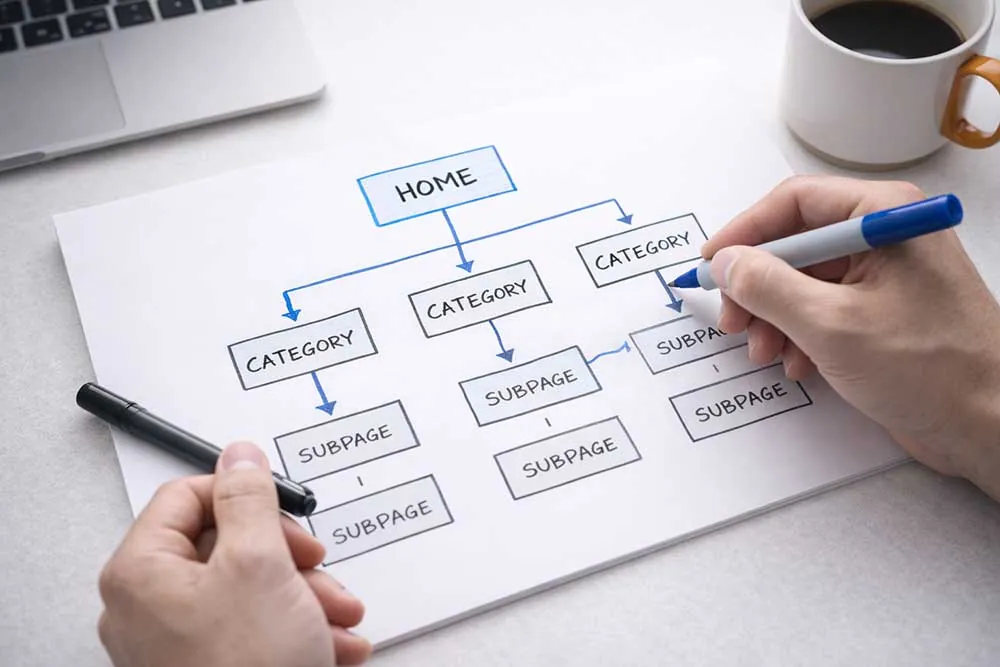
A clear site structure is the basis of effective internal linking. Imagine your site as a tree: the homepage is the trunk, the main categories are the branches, and the deep pages such as products or articles are the leaves.
- Simple structure: A structure with low click depth lets users and crawlers easily reach strategic pages. Important pages should be reachable in fewer than three clicks, a golden rule for optimising the user experience.
- Logical hierarchy: Group pages around clear themes to guide visitors through their navigation. For example, the main categories could include sub-topics or product pages.
Semantic cocoon and link relevance
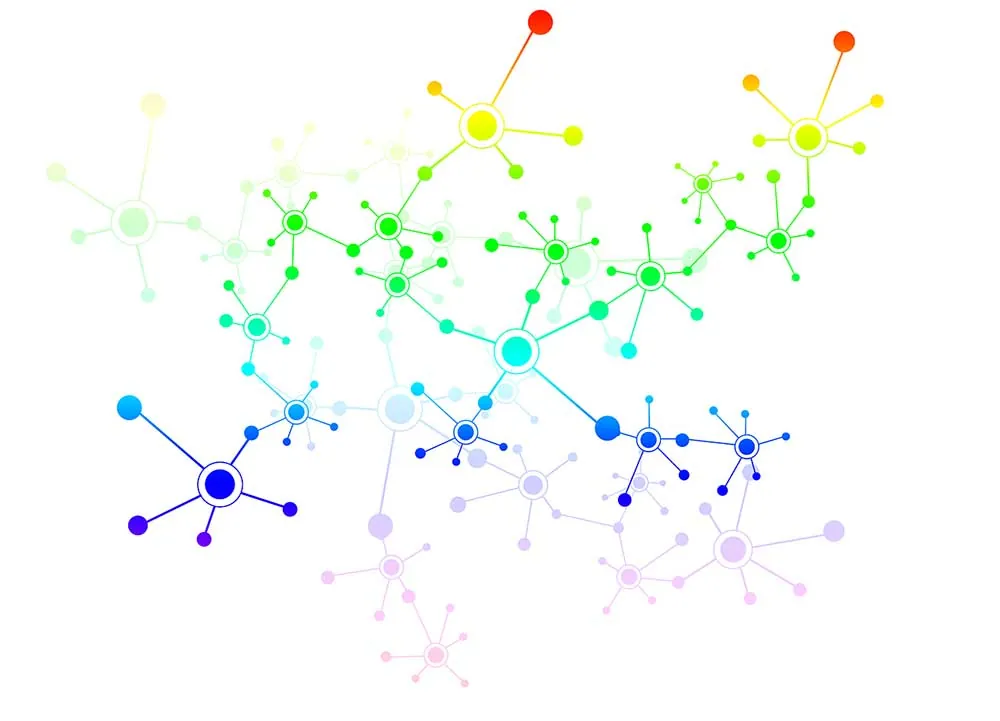
The semantic cocoon rests on a content organisation strategy in which each page is linked to other pages covering similar themes. This creates a coherent network that strengthens search engines’ understanding of your topics.
- Contextual links: Place internal links in the body text to connect pages covering similar subjects. For example, an article on “SEO optimisation” can include a link to a page about “Link Juice”.
- Related pages: Offer links to articles or pages directly related to your users’ needs. This strategy improves their satisfaction and encourages deeper exploration of your site.
Optimising link anchors
The link anchor, or clickable text, is a key element for SEO and user experience. It should be concise, descriptive and include relevant keywords.
- Example: Rather than using a generic anchor such as “Click here”, prefer wording like “Discover our tips for improving your internal linking”.
- Vary your anchors: A variety of anchors avoids over-optimisation and enriches your search strategy. You can use similar terms or synonyms to reinforce your semantic cocoon.
Link density and quality
Good internal linking relies on a balance between the density and quality of internal links.
- Reasonable density: Too many internal links on a single page can drown the user in information and spoil their experience. Limit yourself to 5 to 10 relevant links per page.
- Relevant links: Each link should add value by guiding the user to complementary or enriching content. Make sure links serve both your SEO goals and internet users’ expectations.
Advanced internal linking techniques
1. Canonicalisation and canonical URLs
Using canonical URLs avoids duplicate content problems. This practice tells search engines which version of a page to prefer.
2. Tags and XML sitemap
- XML sitemap: Give search engines a clear map of your site to make indexing easier.
- Schema markup: Improve search engines’ understanding of your content with structured markup.
3. Link distribution and intuitive navigation
- Deep links: Favour pages located at lower levels of the structure.
- Dropdown menus: Offer clear options without overloading the navigation.
4. Tools and technical optimisation
- robots.txt: Control crawlers’ access.
- 301 redirects: Use them to redirect broken links to live pages.
- JS SEO: Make sure internal links handled by JavaScript can be crawled by search engines.
Measuring and optimising the results of your internal linking strategy
To keep improving your internal linking, analyse page performance and user behaviour.
Key internal linking indicators
- Bounce rate: Identify pages with a high rate and add links to related content.
- Click depth: Make sure strategic pages are reachable in fewer than three clicks.
- Time spent on pages: Increase engagement with enriched content and relevant recommendations.
- Exit rate: Optimise high-exit pages by offering attractive calls to action.
- Conversion rate: Analyse whether your links effectively steer visitors towards your goals.
Tools for analysing internal link building
- Google Analytics: Identify the most and least visited pages.
- Search Console: Monitor indexing problems and assess the coverage of your XML sitemap.
- SEO crawlers: Use tools such as Screaming Frog to analyse the density and quality of the links in your link building.
Concrete examples of internal linking
- Blog:
- Link your articles by theme (“5 tips for effective SEO” linked to “How do you optimise your link juice?”).
- Add pagination links for smooth navigation.
- E-commerce:
- Create clear dropdown menus to group products by category.
- Insert download links for product guides or instruction leaflets.
Internal linking, an indispensable tool for working on your SEO
Internal linking is a fundamental strategy for improving your on-site SEO and offering your visitors an optimal experience. By working on your site structure and internal links, and by using tools such as the XML sitemap or 301 redirects, you can optimise navigation, reduce the bounce rate, and reach your conversion goals.
Take the time to analyse your current structure, identify opportunities for improvement, and implement effective strategies to maximise your site’s performance. Well-designed internal linking is a powerful weapon for strengthening your domain’s authority and satisfying search engines and internet users alike.
To go further: building silo internal linking and reducing click depth.