PrestaShop, our recommendation
For a rich offer: variants, prices per customer group, multi-store and statistics in a comprehensive back office.

Building an ecommerce website means designing a complete online store: product pages, basket, secure payment, delivery, customer accounts and order tracking. Want to launch your business online, or open a new sales channel alongside your physical shop? As an ecommerce agency specialising in PrestaShop, Web Opteam supports you from choosing the platform to launch day, then in running your online store day to day.
We build stores on PrestaShop or WordPress depending on the size of your catalogue and your needs, or as custom development when no platform on the market fits. Every project brings together development, user experience (UX/UI), SEO and web analytics, for a store that is easy to manage, visible in search engines and effective at turning visitors into customers. We work by video call with businesses across France and abroad, in English too.
An online store that sells is prepared before the first line of code. Here is how we run an ecommerce website project, from analysing your business to supporting you after launch.
We start from your sector, the type of products you sell, your audience and your competitors: number of products, variants (size, colour), shipping methods, payment methods, tools to connect. Everything goes into a specification document that serves as the reference throughout the project.
An existing ecommerce solution or custom development: we recommend the option that suits your offer, your budget and your in-house resources, and explain why.
Usability plays a key role on an ecommerce site: from the home page to the product page, then from the basket to payment, every step of the checkout funnel counts. Our UI designer designs the site structure and mock-ups, which you approve before development.
Once the mock-ups are approved, we build the store, responsive and mobile-first, then set up the products, payment methods, shipping costs and mandatory pages.
Checkout journey, payments, confirmation emails, mobile display, loading times: we take the time to test everything on a beta version before going live on your own domain name.
Your back office lets you manage your catalogue and orders yourself from launch day. Our web analytics team can then track sales, traffic and conversion rate to improve the store.
The choice of platform depends mainly on the number of products and how complex they are. PrestaShop is the solution we recommend in most cases: built for online retail, it natively handles large catalogues, product variants, customer groups and sales statistics. If you sell a small range without variants, or if content matters as much as sales, WordPress with WooCommerce can be enough.
Both are free, open-source software that anyone can download: you pay for building the site, hosting, the domain name and any modules, not for a licence. SaaS solutions such as Shopify run on a subscription, with a template to customise: quick and simple to get started, but you remain dependent on the platform and its options. Finally, for a very large catalogue or a store that relies on many API connections, custom web development with Symfony may be the best option.
For a rich offer: variants, prices per customer group, multi-store and statistics in a comprehensive back office.
An extension that covers the essentials of selling online, suited to a small product range or a site that publishes a lot of content (blog, guides, articles).
A platform built around the way you sell, connected to your software (ERP, accounting, CRM), when no off-the-shelf solution is enough.
Whatever the option, you remain the owner of your website, your domain and your logins.
Our ecommerce agency keeps an eye on the features that help you sell. Among those our clients ask for most often:
There are many more, and we suggest them according to your needs rather than weighing the site down with unnecessary modules: every module added is one more thing to maintain.
Selling online comes with precise rules that need to be planned from the build stage. For a store selling in France, the French government guide “Faire du commerce en ligne (e-commerce) : règles à respecter”, published on entreprendre.service-public.gouv.fr, lists the key points:
We set up the matching pages and journeys (legal notice, privacy policy, cookie management), without forgetting the security of customer data; the legal content of your terms and conditions remains for you or your legal adviser to approve.
Opening a store is not enough: you need visitors, then you need to convince them to buy rather than go to a competitor. What sets you apart is your offer, your services and the clarity of your site: product pages that answer questions, quality photos and videos, a frictionless journey and customer service that is easy to reach.
Once live, your store is run from its back office: adding products, managing stock, processing orders, customer support, sales statistics. PrestaShop has a very well-designed dashboard for this, easy to use, so you stay in control from launch day.
Digital retail never stands still, and an ecommerce website needs regular updates: CMS versions, modules, payment security. A website maintenance contract keeps your store up to date, secure and ready to grow. We can also host your site on our dedicated or semi-dedicated servers: see our website hosting offer. All your requests are centralised in your Hub Opteam client portal, with a single point of contact.
A few of the stores our team has worked on:
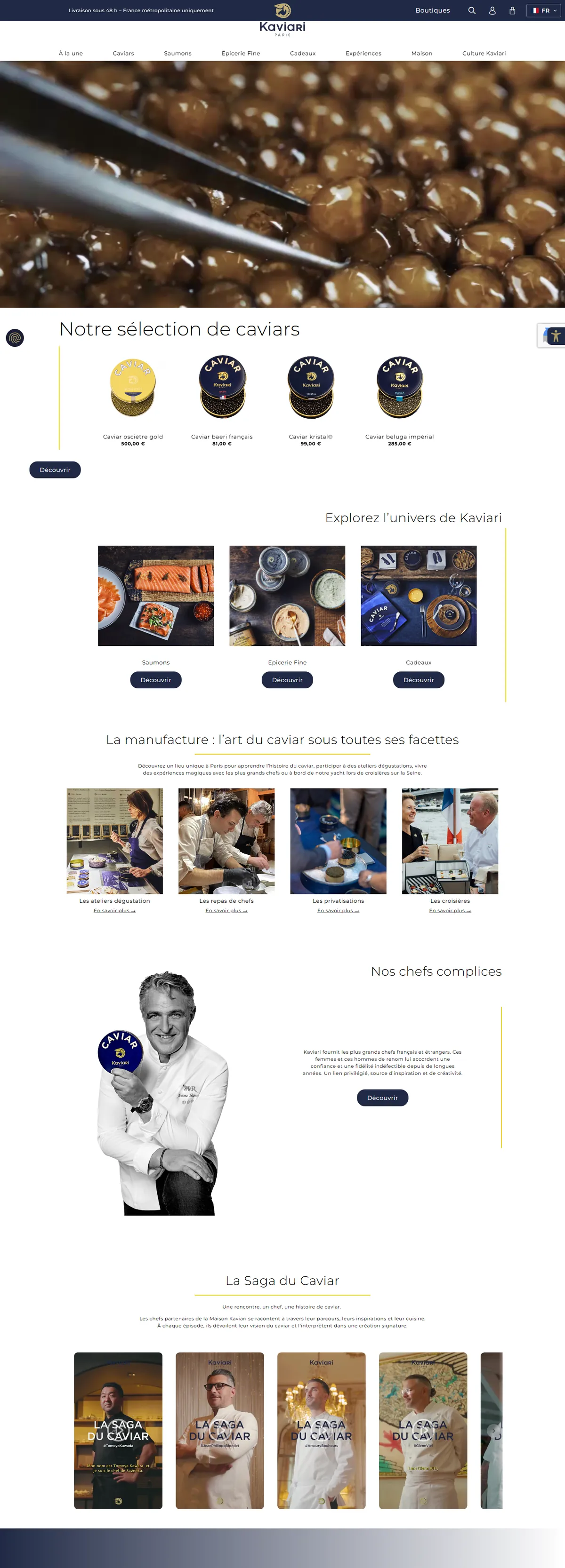
Kaviari is a family-run caviar house whose expertise and quality have endured since 1975. Since the days of…
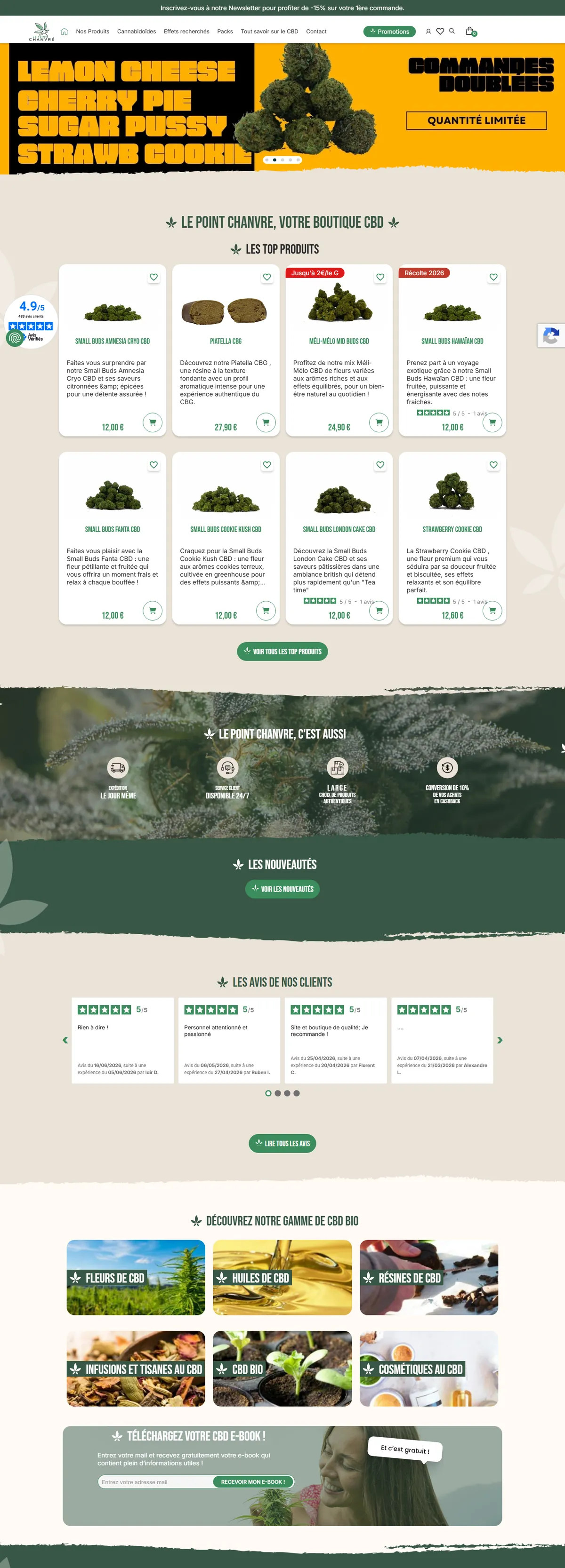
Le Point Chanvre is an online shop selling CBD products in every form. Although it is a market with very big…

MKBS is a Korean skincare shop built around reconnecting with yourself, run by an independent founder. The…
An ecommerce website opens up a national or even international market, beyond your local catchment area. With good SEO, you gain visibility and attract new customers wherever they are.
Everything is managed from your platform’s interface: products, orders, customers. You can start with a small team and grow your business later.
Your store has no opening hours. People can browse your products and buy at any time.
For a physical shop or a network of outlets, the website extends your business and your communication: it reaches customers who prefer to buy online and acts as a digital showcase for your whole network.
There is no single price: the cost of building an ecommerce website depends on its scope. The number of products and variants, the design (customised theme or dedicated mock-ups), the features, connections to your tools, taking over an old site (data migration, redirect plan, see our website redesign page) and writing product descriptions all affect the budget.
You also need to plan for recurring costs: domain name, hosting, paid modules, your payment provider’s fees and maintenance, not to mention the time it takes to add your products and answer your customers. For a store to be profitable, these costs need to be weighed against the margin you make on each sale. We start with a video call, then send you a free, detailed quote that states what is included and what remains your responsibility. You don’t need a full specification to contact us: a clear idea of your goals is enough.
There are many CMSs for building ecommerce websites: Shopify, Magento, PrestaShop… For its simplicity as well as for SEO work, we recommend PrestaShop in most cases. For a very large catalogue or a store that relies on APIs, custom development may be the best solution.
An ecommerce website is more complex than a business website: payments, shipping, legal requirements, data security and SEO call for real technical know-how. A provider that combines development, UX/UI and SEO saves you from building a beautiful store that nobody finds or that converts poorly.
Yes. Adding features, a new payment method, a language or a connection to your ERP is part of a store’s life. With a healthy site, free of home-made modules that block updates, these changes happen without rebuilding everything.
Marketplaces bring volume, but only the traffic on your own site belongs to you: your customers, your data and your brand stay with you. The two channels often complement each other.
What if your next website became your best salesperson?
Keep in touch!
We reply within one business day, in English, with an honest first opinion, even if it shakes things up a little.